Why a virtual model
A short essay on the practical, creative and environmental case for staging fashion beyond the constraints of a shoot.
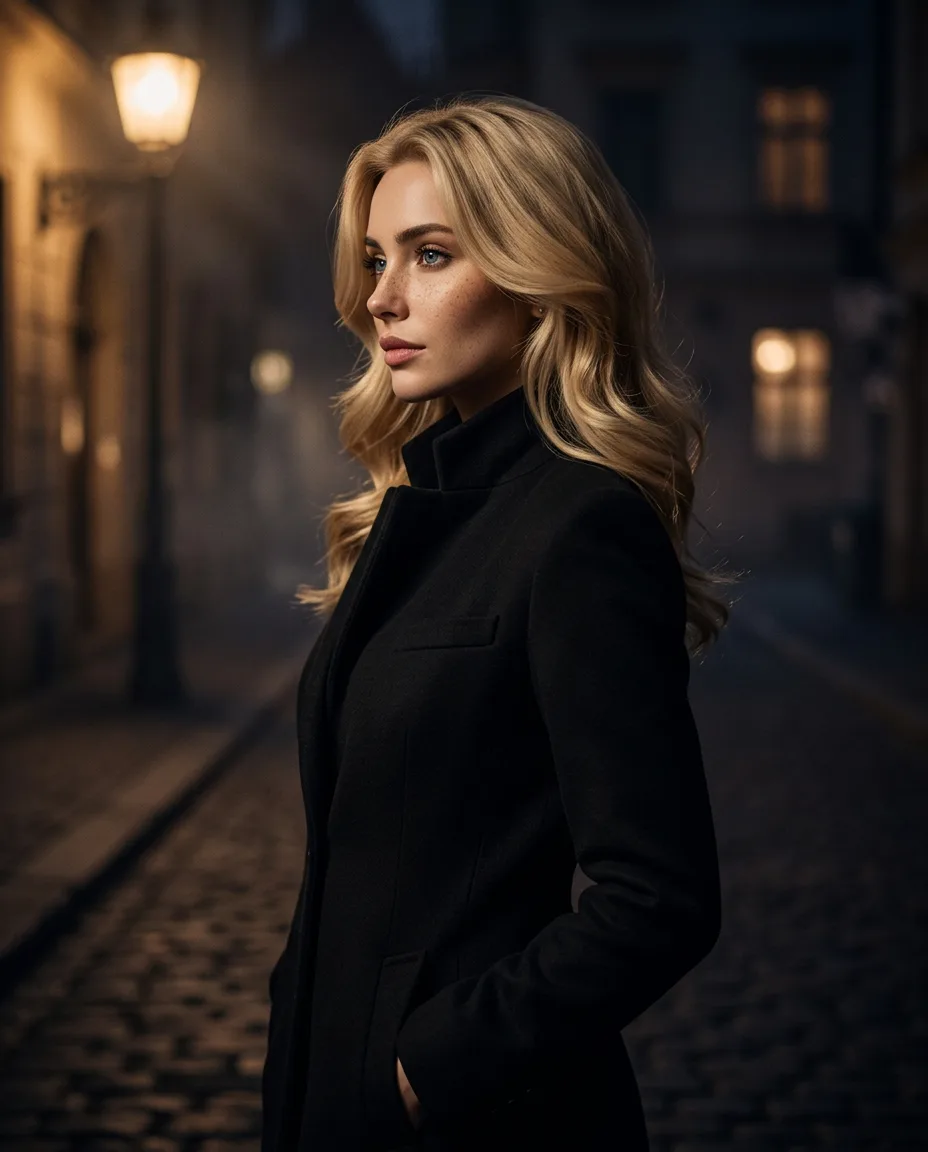
The traditional fashion shoot is a small act of orchestration. A crew is assembled, a location secured, a schedule negotiated with the weather. Flights are booked, permits filed, hotel rooms held for people who will spend most of the day waiting for the light. It is, in its own way, a beautiful discipline — and it is also a set of limits. Limits on where a garment can be photographed. Limits on how often a vision can be revisited without exhausting the budget that made it possible in the first place.
Limits, quietly dissolved
A virtual model quietly dissolves several of those limits at once. The wardrobe travels without a passport. The location changes without a plane. A cliff in the north and a courtyard in the south can sit two frames apart, and neither one requires a van of equipment to arrive at dawn. What remains fixed is the only thing that ever needed to be fixed: the vision at the centre of the image.
None of this removes the photographer's eye or the stylist's hand; it removes only the friction between intention and execution. The distance from imagine to show collapses from months to days — and in that collapse, a different kind of fashion imagery becomes possible.
The creative case for iteration
When a shoot is expensive, it must be right the first time; the aesthetic is negotiated against the clock. When the shoot is virtual, iteration becomes cheap in the way sketching is cheap for a painter. A silhouette can be tried in ten fabrics before the tenth is chosen. A palette can be tested against a season, not a swatch. The result is not more images — it is, if anything, fewer — but the ones that remain have been chosen rather than settled for.
The environmental argument, made plainly
There is an environmental argument here that deserves to be made without overstatement. A virtual editorial does not put a crew on a plane. It does not truck lights through a protected landscape. It does not fly a single sample around the world to be worn for an afternoon and returned.
None of this replaces the craft of photography, and it is not meant to. It simply lowers the cost — ecological, logistical, human — of asking a question like: what would this look like at the edge of a coastline that only exists in the imagination?
A form of authorship
The last argument is the one that matters most to me, and it is a quieter one. A virtual model is, finally, a form of authorship. The frame is composed rather than captured, but the discipline that goes into it — the taste, the restraint, the willingness to reject nine variations for the tenth — is the same discipline that has always distinguished fashion imagery from mere documentation.
That is why a virtual model. Not to replace the shoot, but to stand next to it. To give the vision room to breathe, and to leave the world a little more intact while doing so.
What it means for brands
For a brand, the practical consequence is a different relationship with time. A campaign can be developed alongside a collection rather than after it, refined as the samples are finalised, and adapted for each market without a second production. The visual identity stays constant because the face at its centre never changes.
It also changes the conversation about risk. A conventional shoot commits a large budget to a single window of weather and availability; a virtual production spreads that commitment across a series of smaller, reversible decisions. If a direction does not work, it is revised — not reshot.
None of this is an argument against photographers, stylists or models. It is an argument for having one more instrument in the room, and for choosing it deliberately when the story calls for a landscape no crew could reasonably reach.