The quiet craft of AI fashion
Notes on treating a virtual wardrobe with the same discipline as an atelier — thread by thread, drape by drape.
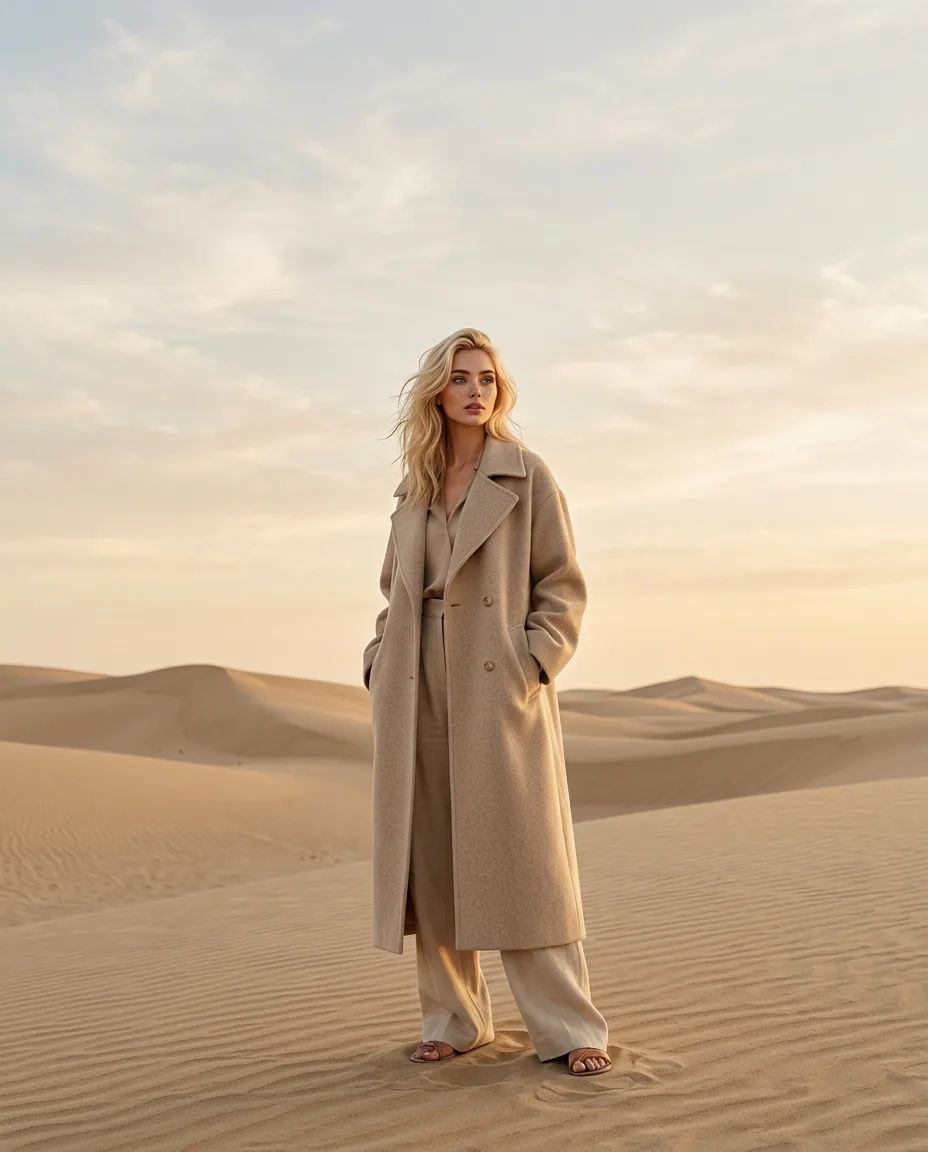
There is a temptation, working with generative tools, to reach for spectacle. To render maximalism because you can. To let the machine improvise where a designer would restrain.
Margaux was built against that temptation. Every frame in this portfolio begins the way a garment begins: with a decision about what will be left out.
Selection as a discipline
The discipline of digital fashion is the opposite instinct. It is a slow selection of fabric, seam, silhouette; a willingness to reject nine variations for the tenth that finally sits correctly on the shoulder. The tools produce abundance; taste produces the edit. A virtual wardrobe can offer infinite drape options in seconds, and it is precisely this abundance that makes restraint the rarest skill in the process.
A look is finished not when nothing more can be added, but when nothing more can be removed. In practice that means walking away from a rendering session with fewer images than you started the day imagining — and being certain of every one you keep.
The atelier parallel
Treated this way, a virtual wardrobe is not a shortcut. It is an atelier with a different set of tools — and the same requirement of taste. The seamstress pins and re-pins; the digital tailor adjusts and re-renders. Neither confuses iteration with indecision.
What changes is the distance between idea and evidence. A moulage that once required a muslin, a fitting and a week of alterations can now be proposed, reviewed and discarded before lunch. The craft is not faster so much as closer: the sketch and the garment now occupy the same room.
Restraint over spectacle
Spectacle ages quickly. It announces its own production date — the lens flare of one year, the neon gradient of the next. Restraint, by contrast, is almost dateless: a wool coat in low winter sun could have been photographed in any decade.
That is the ambition for this portfolio. Not images that impress on first viewing, but images that still hold on the tenth — quiet frames in which fabric, light and terrain do the talking, and the machinery behind them stays politely out of frame.
Materials before machines
Every look in the portfolio starts with a material, not a prompt. Cashmere, double-faced wool, raw linen, heavy silk crêpe — each has a known behaviour in wind, in rain, in low sun. Describing that behaviour precisely is most of the work; the tools only follow what the brief already understands.
This is where AI fashion either earns its credibility or loses it. A coat that moves like paper, a knit without the slight irregularity of real yarn, a silk that reflects light like plastic — the audience may not name the fault, but they feel it. Knowing textiles is not optional for digital fashion; it is the foundation.
For that reason, references come from garments and photographs rather than from other generated images. An archive of real tailoring keeps the work anchored in clothing people could actually wear.
A slower way of working
The irony of generative tools is that they reward patience. Fast work produces many images that look alike; slow work produces a few that look like a point of view. Margaux's portfolio grows by a handful of frames at a time, and each addition has to justify its place beside the others.
That pace is a choice, and it is the same choice ateliers have always made: fewer pieces, made with more care, intended to last longer than a season.