Sculptural silhouettes in Margaux’s wardrobe
Shape before detail: how architectural eveningwear, textured knitwear and softly draped gowns create balance in Margaux’s couture-inspired editorials.
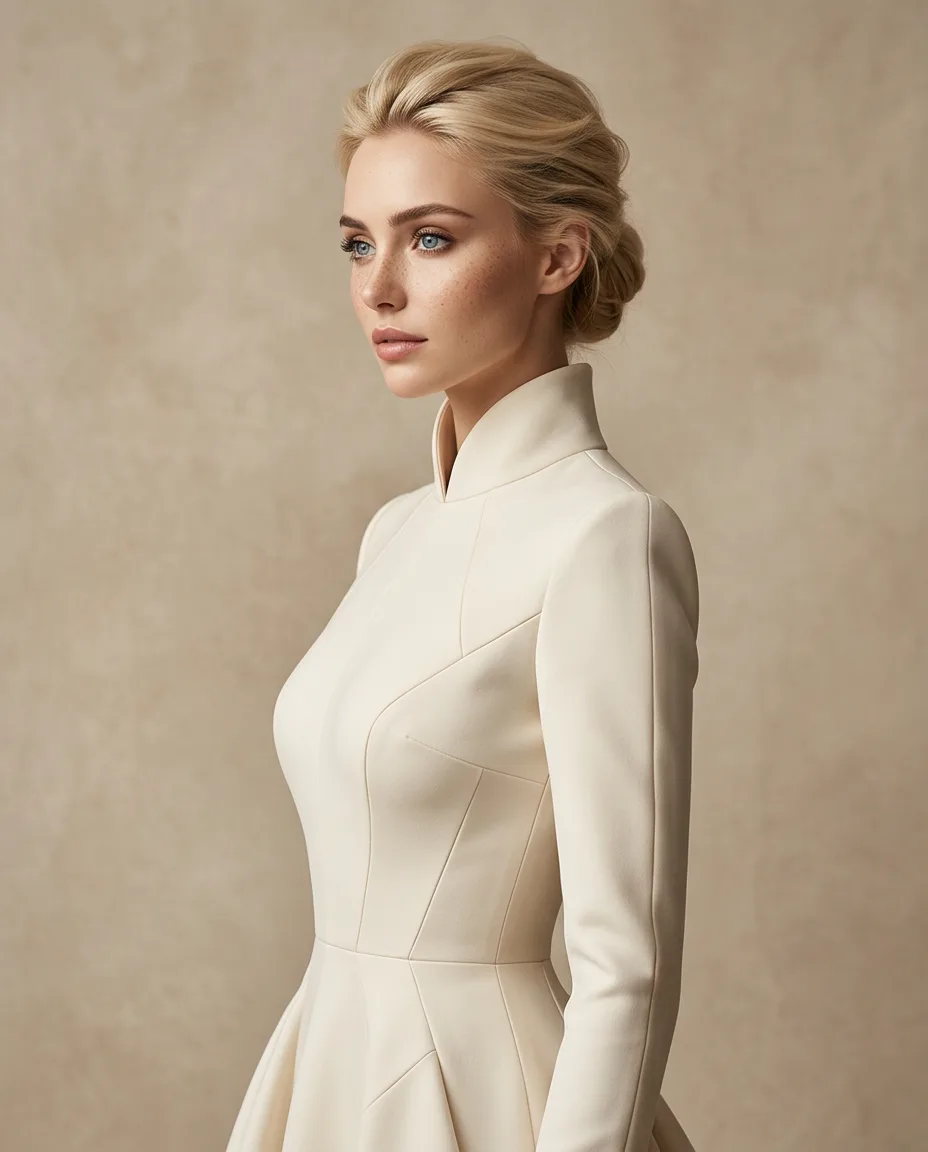
Read the outline first
Before you notice a seam, an image gives you a silhouette. A wide gown, a narrow column, a defined shoulder: each changes how a look occupies the frame. In Margaux’s couture and landscape editorials, that first reading is often the most important one. The surroundings remain spacious enough for the shape to have a clear voice.
The word sculptural does not have to mean complicated. It can describe one deliberate volume or a single line that makes a garment memorable. The ivory look in the collection is a useful example: a high collar and defined waist give the closer portrait its shape, without needing to show the gown from head to hem.
Give a statement some space
A striking silhouette becomes less striking when everything beside it is equally emphatic. In an editorial, space around a gown lets the eye understand its scale. In a wardrobe, the equivalent is restraint in the surrounding pieces. One expressive shape can be enough; another competing feature may only make it harder to read.
The black dress in Margaux’s selection turns attention toward contour. Its darker surface changes the relationship between fabric and background, while the ivory look opens the image in another way. Neither is presented as a named designer garment. These are digitally imagined fashion studies centred on Margaux’s likeness and style.
Texture is another kind of shape
Volume is not the only route to a strong silhouette. In the highland frame, a sage knit top and long textured skirt supply a quieter line. The interest comes from a softly defined waist, the weight of the skirt and the contrast between its surface and the mist beyond it. The look is knit-led rather than sharply tailored.
This is why a collection of sculptural looks benefits from a softer frame. It changes the scale of the statement. After the angular black dress, a textured knit feels deliberate in a different way. Personal style can hold both without requiring every outfit to make the same announcement.
The fold as a counterpoint
Draped silk introduces a line that is followed rather than outlined. The eye moves along a fold, then pauses where fabric gathers or changes direction. Beside the more emphatic gowns, this softer look gives the selection breathing room. Contrast makes each image more distinct, not less coherent.
That balance is the thread through Margaux’s editorial wardrobe: a statement, a pause, a change of surface. The imagined landscape supports the rhythm, but it is not a record of a journey or a physical shoot. What stays with the viewer is the relationship between the woman, the clothing and the space each look leaves around her.